Mauthausen
The Tattooist of AuschwitzMauthausen, in Austria, is the second major concentration camp Lale Sokolov is sent to after his time in Birkenau. When a fellow prisoner recognizes the place, he offers a grim assessment that Lale accepts without argument: "Mauthausen, in Austria. Not quite as terrible as Birkenau, but nearly." This single line establishes the camp's place in the hierarchy of Nazi terror—a place of profound suffering, yet one that, in the eyes of those who had endured Birkenau, was not the absolute worst. For Lale, Mauthausen represents a new and uncertain phase of his ordeal, a place where he is stripped of his role as the Tätowierer and reduced once again to an anonymous prisoner, forced to rely on his wits and his few remaining resources to survive.
Arrival and the Loss of Identity
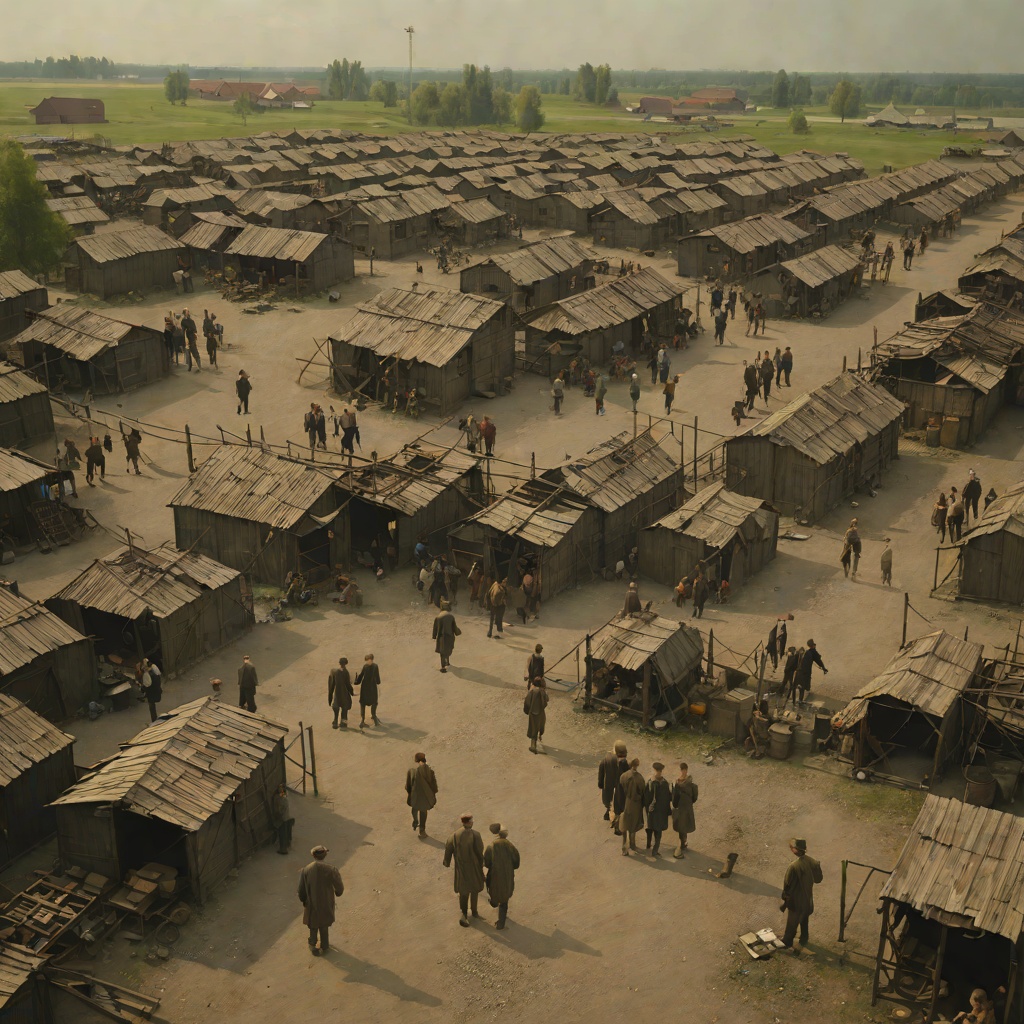
Lale's arrival at Mauthausen marks a sharp break from the relative privilege he had known in Birkenau. In Birkenau, his role as the camp tattooist had earned him a single room immediately inside the door of a completed block, extra rations, and a degree of protection from the worst of the camp's brutalities. At Mauthausen, that status is gone. He is just another prisoner, one among many, with no special function and no guaranteed safety. The camp's very atmosphere seems designed to strip away whatever sense of self he had managed to preserve. The uncertainty of his new situation is compounded by the fact that he is probably the only Slovak prisoner there, leaving him largely isolated. While Poles, Russians, and a few Italians sit around all day talking with their countrymen, Lale has no one to share his language or his memories with. He keeps to himself, watching, waiting, and trying to understand the new rules of survival.
The Daily Routine and the Guard's Interest
For several weeks, Lale and all the other prisoners at Mauthausen sit around doing virtually nothing. This enforced idleness is a different kind of torture, a slow erosion of purpose and hope. Almost all he can do is watch, in particular the SS guarding them, and he tries to work out who can be approached and who must be avoided. His careful observation pays off when he starts to talk occasionally to one of the guards. The guard is impressed that Lale speaks fluent German, a skill that sets him apart from the other prisoners. The guard has heard about Auschwitz and Birkenau but has not been there, and he wants to hear about it. Lale, ever the strategist, paints a picture removed from reality. He understands that nothing can be gained by telling this German the true nature of the treatment of prisoners there. Instead, he tells him what he did there and how he much preferred to work than to sit around. This calculated performance, born of his experience and his instinct for survival, plants a seed in the guard's mind.
The Offer of Transfer
A few days later, the guard approaches Lale with an unexpected proposition. He asks if Lale would like to move to a subcamp of Mauthausen, at Saurer-Werke in Vienna. Thinking it cannot be any worse than here, and with assurances from the guard that conditions are slightly better and the commandant is too old to care, Lale accepts the offer. The guard adds a crucial warning: this camp does not take Jews, so Lale should keep quiet about his religion. This moment is a testament to Lale's ability to read people and manipulate situations to his advantage. His fluency in German, his willingness to engage with the enemy, and his decision to conceal the horrors of Birkenau all combine to create an opportunity for escape from the stagnation of Mauthausen. The very next day, the guard tells him, "Gather your things. You're out of here." Lale's time at Mauthausen, though brief, is defined by this single, decisive act of self-preservation.
The Significance of Mauthausen in Lale's Journey
Mauthausen serves as a transitional space in Lale's larger narrative, a way station between the horrors of Birkenau and the relative freedom of Vienna. It is a place where he is stripped of his identity and forced to rebuild it from scratch, using only his intelligence and his hidden resources. The camp tests his ability to adapt, to observe, and to seize opportunities when they present themselves. His time there is marked by isolation and uncertainty, but it is also where he demonstrates his remarkable resilience. The decision to accept the transfer to Saurer-Werke, and to conceal his Jewish identity, is a calculated gamble that reflects his unwavering determination to survive and, ultimately, to find his way back to Gita. Mauthausen, in this sense, is not just a place of suffering but a crucible in which Lale's survival instincts are honed and refined, preparing him for the challenges that lie ahead in Vienna and beyond.